

 Explore Worlds
 Find Life
 Defend Earth
Planetary Radio • Mar 18, 2026
The 18th European Space Conference: Dreaming of European boots on the Moon
On This Episode

Andrius Kubilius
European Commissioner for Defence and Space, European Commission

Josef Aschbacher
Director General, European Space Agency (ESA)

Benjamin Haddad
Minister Delegate for European Affairs, Government of France

Dorothee Bär
Federal Minister for Space, Federal Government of Germany
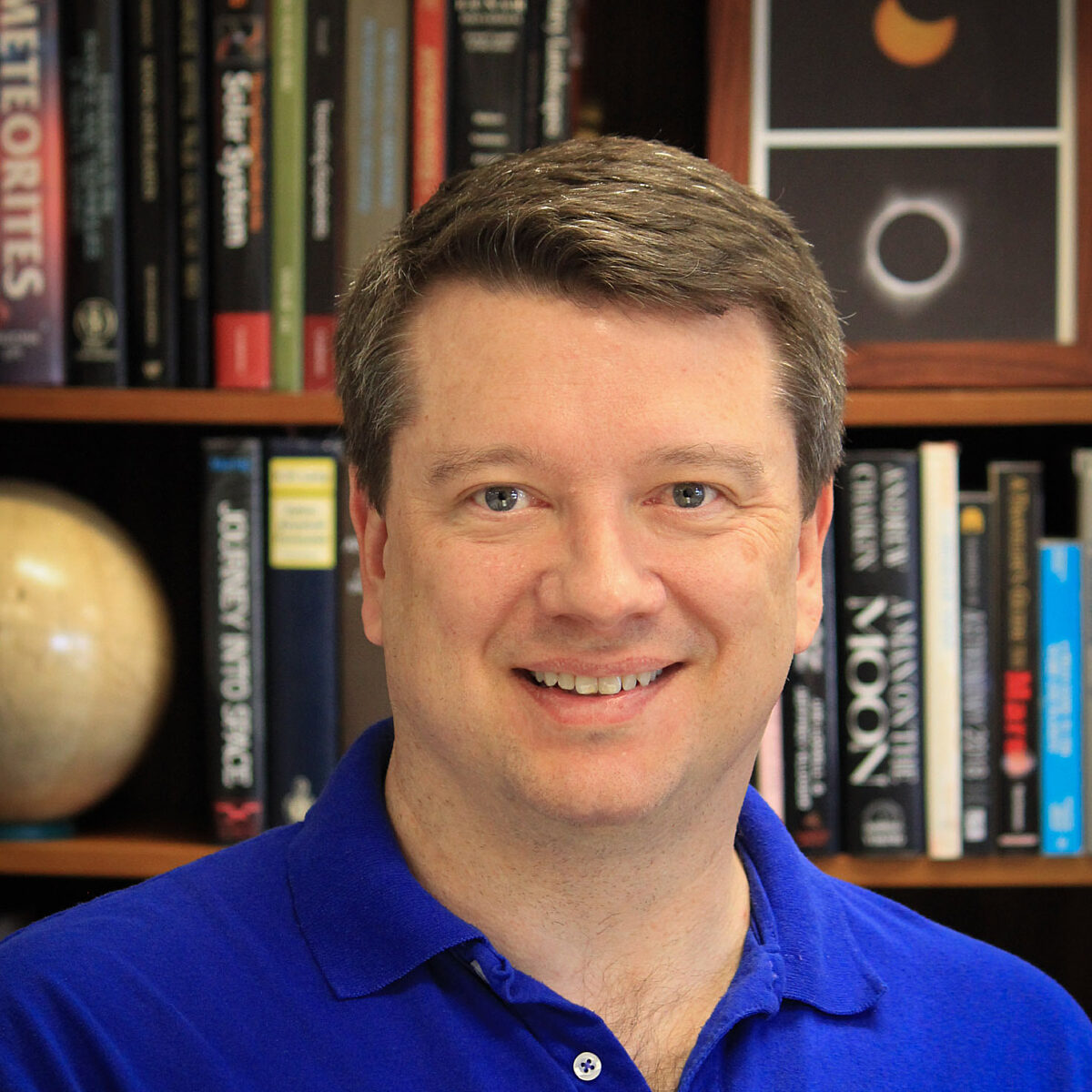
Bruce Betts
Chief Scientist / LightSail Program Manager for The Planetary Society
Sarah Al-Ahmed
Planetary Radio Host and Producer for The Planetary Society
Also in this episode:
- Tomas Dimitrov, Deputy Executive Director logos & Business Bridge Europe
- Nicola Pizzolorusso, Vice President Strategic Planning, Scenarios and New Initiatives, Telespazio
- Cristina Valente, Head of ESA / ASI Market Unit, Telespazio
- Stefaan De May, Strategy Team Leader for Human and Robotic Exploration, ESA
- Cheryl Gramling, Cislunar Strategist and PNT Lead, NASA
- Giancarlo Varacalli, Head of Telecommunications and Navigation, ASI
- Logan Ware, Commercial Director, Blue Origin
- Julien Lamamy, Chief Executive Officer, ispace-EUROPE
- Jason Soloff, Lunar Data Network Chief Engineer, Intuitive Machines
- Brett Stephens, Director, International and Government Programs, Firefly Aerospace
- Ariana Carruth, Director of Spacecraft, Commercial and Civil, Firefly Aerospace
Humanity is going back to the Moon, and Europe is already playing a critical role in making it happen. This week, Planetary Radio brings you voices straight from the 18th European Space Conference in Brussels, Belgium, where more than 2,000 of the world’s top space leaders gathered to shape the future of European space exploration.
We begin with conference co-organizer Tomas Dimitrov of Logos and Business Bridge Europe, who sets the stage for the conversations ahead. From there, we hear from European Commissioner for Defence and Space Andrius Kubilius, ESA Director General Josef Aschbacher, French Minister Delegate for European Affairs Benjamin Haddad, and Germany’s Federal Space Minister Dorothee Bär.
We also take you inside the Moonlight Initiative panel, bringing you the full conversation as scientists and engineers from ESA, NASA, and industry lay out their vision for building GPS and communications infrastructure around the Moon, and wrestle with what it will really take to support a permanent human presence there.
Then, Planetary Society Chief Scientist Bruce Betts joins us for What’s Up to tackle one of the most fascinating and unexpected challenges of lunar exploration: what time is it on the Moon?
Transcript
Sarah Al-Ahmed:
The 18th European Space Conference and the Race Back to the Moon, this week on Planetary Radio.
I'm Sarah Al-Ahmed of The Planetary Society with more of the human adventure across our solar system and beyond. This week, we're bringing you voices from the 18th European Space Conference in Brussels, the annual gathering where Europe space leaders talk about the years ahead. We start with Tomas Dimitrov, Deputy Executive Director of Lagos and Business Bridge Europe, the organizations behind this conference.
Then European Commissioner for Defense and Space, Andreas Kubilius, reflects on a landmark year for European space policy and the programs defining Europe's future in orbit. European Space Agency Director General, Josef Aschbacher makes the case for why this decade is make or break for European competitiveness and why he wants to see a European boot on the moon. Then France's minister delegate for European affairs, Benjamin Haddad frames lunar exploration as the next chapter of the European dream.
Germany's federal space minister, Dorothee Bär, reminds us that the upcoming Artemis 2 mission to the moon cannot fly without European hardware. You'll also hear from many other guests during a full panel on the Moonlight Initiative, Europe's ambitious plan to build GPS and communications infrastructure for the moon.
Then we'll wrap up with our chief scientist, Bruce Betts, who joins me for What's Up. We'll dig into one of the most surprising challenges for lunar exploration. What time is it on the moon? And why does Einstein's theory of relativity make that question a lot harder to answer than you might think?
If you love Planetary Radio and want to stay informed about the latest space discoveries, make sure you hit that subscribe button on your favorite podcasting platform. By subscribing, you'll never miss an episode filled with new and awe-inspiring ways to know the cosmos and our place within it.
Humans are going back to the moon. NASA's Artemis 2 mission is getting ready to launch from Kennedy Space Center with four astronauts. They're going to fly around the moon as early as April. It's going to be the first time that humans have ventured that far into deep space since Apollo 17 in 1972.
And China has made no secret out of its own lunar ambitions with plans to land astronauts on the moon by 2030. So where does Europe fit into all of this? That question was front and center at the 18th European Space Conference, held on January 27th and 28th, 2026 in Brussels, Belgium.
The conference is put on every year by Lagos and Business Bridge Europe, a pair of leading EU public affairs and conference organizations. And they've been running it annually since 2008. Over nearly two decades, they've turned it into one of the premier gatherings of Europe's space ecosystem.
This year's edition brought together more than 2000 people from over 50 countries, and it's all at a time when the stakes for European space industry are very high. Europe came into this conference fresh off of a landmark European Space Agency Ministerial Council, where European nations collectively pledged 22.3 billion euros to the European Space Agency.
That's the largest funding commitment in ESA history, and the first time that member states have ever fully matched what ESA itself asked for. That kind of political and financial momentum set the tone for everything that followed. And the moon was very much a part of that conversation. Europe isn't just a spectator in the lunar race.
The Orion spacecraft carrying those four Artemis 2 astronauts around the moon runs on a European-built service module made in Germany, which provides the cruise air, water, and propulsion. European leaders are also talking about the Moonlight Initiative, Europe's ambitious plan to build its own lunar communications and navigations infrastructure in support of future exploration missions.
What you're about to hear are clips taken directly from the conference floor in Brussels. We'll kick things off with someone who is right at the center of making this conference happen, Tomas Dimitrov. He's the Deputy Executive Director of Lagos and Business Bridge Europe. And he's one of the key architects behind the European Space Conference. He welcomed everyone on the first day.
Tomas Dimitrov:
Ladies and gentlemen, esteemed guests, good morning and welcome to the 18th European Space Conference. It's both an honor and a privilege to stand before you today, representing a team fully devoted to building and sustaining this unique platform for debates, exchanges, and networking within the European space community. At a time when fundamentals are shifting before our very eyes, we are reminded of the importance of European unity and collective strength.
The European space sector underpins our sovereignty, our security, and our competitiveness. In many ways, it reflects Europe's resolve and ambition on the global stage. That is precisely why this conference remains so special. For almost two decades, it has been unapologetically European. It mirrors the state of the European space sector in all its dimensions, celebrating remarkable achievements and also confronting challenges openly and honestly. The European Space Conference has been evolving since 2008, thanks only to the unwavering support of the European Commission, the European Space Agency, European governments, and the European industry.
Your ambition in space, your belief in Europe, and your commitment to open and stimulating discussions are the foundations on which the conference stands.
Sarah Al-Ahmed:
One of the biggest voices at the conference is Andrius Kubilius, the European Commissioner for Defense and Space. Think of him as the European Union's top official responsible for making sure Europe can hold its own in space, both economically and militarily. He just completed his first year in the role. Andreas delivered the opening address on day one, reminding the room why all of this matters in the first place, not just for defense purposes, but for the future of Europe. He touched on what makes space inspiring and gave a quick rundown of some of the programs that represent Europe's biggest bets in space right now. I'm only going to share a little bit of his opening remarks, but he mentions a few programs that the EU has going on in space, three of which you should know about ahead of time. First is Galileo. That's Europe's own version of GPS.
Rather than relying on the American GPS Network or Russia's GLONASS, Europe built its own global satellite navigation system. It's been in development for decades, and as of this conference, it just hit a major milestone, 10 years in service.
Second is Copernicus. That's Europe's earth observing program. It's a fleet of satellites called Sentinels that continuously monitor our planet, tracking things like land changes, sea levels, air quality, and ocean conditions. And third is IRIS². That's one of the newer and probably the most ambitious programs. It's Europe's answer to SpaceX's Starlink. It's a constellation of satellites that would give Europe its own sovereign, secure broadband network from space. The goal is to make sure that European governments and militaries never depend too much on foreign-owned systems for communication. At the conference, Kubilius announced that he's pushing to get the initial services up and running by 2029.
Andrius Kubilius:
Really, I'm very happy to address you again today. One year on in my mandate. And what a year it was. I would say a year of achievements, but also a year of profound geopolitical changes. Last year, we identified a path towards defense readiness 2030, which also includes space, a year of transformation. Europe seeks its strategic autonomy and independence now more than ever because our world has radically changed. I was in Davos last week. All leaders underlined this change and the need for derisking our economies and diversifying our supply chains, especially in those sectors vital for our independence.
And this certainly is true for defense and space. Ladies and gentlemen, despite the turbulences, space is bouncing back stronger. Last year was a year of continuous delivery. One key lesson I learned in this first year of being space commissioner, space is an inspiration. Space technology is an inspiration.
And how we work together in Europe and space is an inspiration also. Galileo, Copernicus, IRIS². These are for engineering and innovation what the euro is for currency and Schengen for free movement. Projects that benefit an entire continent that no member state can build alone. So be proud. Our defense can learn much from space. The whole of Europe can learn much from space. Space is an inspiration. And you are an inspiration. Thank you very much.
Sarah Al-Ahmed:
Europe is at a genuine crossroads in space, and the decisions made this decade could very well determine whether it remains a serious player or gets left behind. This tension was talked about in a panel called European Space Competitiveness and Readiness, a make or break decade ahead. And the person who set the tone for the conversation was the director general of the European Space Agency, Josef Aschbacher. He's been in that role since 2021. But here's the thing about Europe's position in the moon race, it's not like Europe is sitting on the sidelines. European engineers built a service module that's literally going to keep the Artemis 2 astronauts alive. European astronauts have been going to the International Space Station for ages.
They've even secured seats for their astronauts on future Artemis missions to the moon. And ESA has been a serious partner in deep space exploration for decades.
But even with all of that, Europe doesn't have its own independent plan to put humans on the moon. There are no European rockets capable of sending astronauts to lunar orbit. There are no European landers. There's no roadmap that doesn't run through NASA. While the US and China are both developing a full stack of capabilities to put their own people on the surface, Europe's human presence in the lunar program depends entirely on whether or not they're invited along for the ride. That's the gap that Aschbacher talks about in this clip.
Josef Aschbacher:
In a very few days, Artemis will fly to the moon with the European service module, by the way. Also, China is preparing to land astronauts on the moon just as the United States are doing. India is developing a human base flight capability, and Europe is not. And this for me is very disturbing, that Europe as a high technology nation with some of the best talents and expertise and industries in the world does not have this capability and has no plan today to do it.
So this is something that I think Europe should really reflect. I see a picture here on the wall about an astronaut on the moon. I hope this is a European boot and an European astronaut flying with the European capsule and the European rocket there because this is something that we should discuss. And I really hope, and Timo was mentioning that the Space Summit organized, prepared by President Macron this year is one momentum in this.
On ESA side, we plan an extraordinary ESA ministerial council in '27, not for funding, but for orientation on the exploration domain. And then obviously it leads to our ministerial in '28 and the commissions for EU MFF funding next year. So I do not want to preempt anything, but I think what we should do is, should really have ambition that Europe needs that.
And we need it more than just for the technology that we develop because there's so much cross-fertilization in so many domains here, not only security defense, which is mentioned quite often, but really across the border, which is really benefiting. So yes, we need to be ambitious to be involved, to have a vision and to really do that. I'm not saying that the moon is the only thing we should do. We should still, and of course, protect our climate and our planet with many things we do.
I think ERS for me and EOGS is fundamental for Europe. That proves also how serious we are about doing it differently and faster and for security of our people and our citizens. We have got the money, but now we really have to start deploying with industry in a different way than we have done in the past. There's so much to do. And this is really going hand in hand with the commission. Thank you once more, Timo, and your teams for an incredible work you're doing together with us to make this a reality. There's so much to do. And as I said a bit in my opening speech, I think we should not be shy. We should build up constellations of thousands of satellites and not only 10 or 50 or 100 satellites because we can do it. We have the excellence. And sometimes Europe should just not be too timid and to, I would say, noble, not telling or showing what we can do.
We are excellent. Our industry is incredibly good. I mean, we see here some of the representatives and probably hundreds in the room and thousands out there. This is one of the best industry in the world, which we have here in Europe. Use it and we have to give it a frame to, and of course the framework and the funding to let you run and let you succeed. But there's really so much to do. I'm very upbeat. I think this is something where a lot is to be done, but it requires, as I say, every single one. We are just a small player in this, but needs everyone to really move forward boldly and strongly together.
Sarah Al-Ahmed: Aschbacher is making a strategic argument. Europe needs a seat at the lunar table, but this next voice takes that same idea and reframes it. It's less about a capability gap and more about identity and inspiration. Benjamin Haddad is France's Minister Delegate for European affairs. France has long been one of the most vocal advocates for European strategic autonomy and space. Airbus, which is a French company, builds key components for ESA missions. And France's space agency, KNISS, is one of the most active in Europe. So when Haddad talks about the moon, he's not just speaking as a politician. He's speaking for a country that sees space as central to what Europe is and what it can become.
Benjamin Haddad:
I've heard Commissioner Kubilius talk about boots on the moon, and I think that's exactly the kind of narrative and the kind of ambition that Europeans need in this area. And of course, in the regulatory environment where we need to be able not only to put a level playing field for our actors and have an integrated market at a European level, but also to make sure that space is not the wild, wild west when you think of areas like security or like debris.
This regulation we will support, there's the space law being prepared right now at the European level, making sure that it is shaped in accordance and with the private businesses, with the industrial actors, and not of course without them, I think that's absolutely key. For all these reasons to be able to lead in defense and connectivity in launchers, France will launch the Space Summit in July, bringing together, I hope all of you policymakers, European actors and industrial players, to make sure that space is at the core of the strategic autonomy agenda that we will support in 2026 and the years ahead.
Once again, if we miss this moment, we will leave others define our space, define the rules of the game, and we will completely lose our sovereignty and access in these areas. But if we rise to a challenge, if we put the funding, if we have a common united ambition, if we shape the governments, I think this can be a critical moment for Europe. And once again, not only for our strategic autonomy or for our sovereignty, but what better narrative, what better image of the European dream than show that we can do this together and have access to space. And yes, put European boots and maybe a European flag on the moon at some point. Thank you very much.
Sarah Al-Ahmed: Up next is Dorothee Bär, Germany's Federal Minister of Research, Technology and Space. She came to the conference with some very fresh news. Just two months earlier at the ESA Ministerial Council in Bremen, that meeting where that record 22.3 billion euro budget was secured, ESA Director General Aschbacher announced that the first European astronaut to fly on the Artemis missions is going to be German. That seat on that rocket is a direct result of the fact that Germany is ESA's single largest financial contributor, but also because a factory in Bremen, Germany is building one of the most crucial pieces of hardware for the entire Artemis program. That hardware is the European service module we keep talking about.
Dorothee Bär: I consider it a great honor that the first European astronaut going to the moon will come from our country. We are truly proud of that. And when it comes to the Americans, of course, we will be flying with NASA, but the US rocket cannot fly without us either. So I'm talking about the European service model. When Artemis 2 launches soon and circles the moon, a large piece of Europe will be up there too, as a sign of cooperation with the United States, but also as a sign that Europe has much to offer. And this is more than just symbolism. It is a clear statement, yes, we in Europe, we can do space.
Sarah Al-Ahmed:
If humans are going to go back to the moon, not just to visit, but to stay, that means that the moon is going to need something that we completely take for granted down here on modern day earth, the ability to communicate and navigate.
Think about what GPS and mobile connectivity do for us every day. Now imagine trying to land a spacecraft in the lunar south pole or drive a rover across the surface or keep a crew station running without any of that.
That's the problem that Europe's Moonlight Initiative is trying to solve. We mentioned it briefly earlier. It's an ESA program to build a dedicated satellite constellation orbiting the moon. It's going to provide communication and navigation services for the missions that are going to be going there over the next two decades. This next panel was called A Lunar Communication and Navigation Infrastructure, the Moonlight Initiative.
It goes into some of the technical challenges of building a sustained human presence on the moon, but also about using the moon as a stepping stone and a testing ground for everything that comes after, including eventually putting humans on Mars and maybe the worlds beyond. The first Moonlight satellite is already in development with initial services targeting 2028 and full operations by 2030.
Nicola Pizzolorusso: Distinguished guests, colleagues, ladies and gentlemen. For me, it is a pleasure and honor to be here and moderate this panel about the Lunar Initiative, the Moonlight Lunar Initiative, and the emerging lunar economy. First of all, I would kindly ask each of you to introduce you briefly and also your organization. Let's start with you, Cheryl, that you are connected, please.
Cheryl Gramling: Great. Thank you. First of all, thank you so much for inviting me. This is such a fantastic alignment of panel. So I am the Cislunar Strategist and the PNT lead in NASA headquarters space communications and navigation program, and I lead the Lunar Net Interoperability Specification development and work with our international and industry partners on our communications and PNT surface and orbital infrastructure that's all part of LunaNet. And as a matter of fact, Mr. Camperini and I share a history in developing a Doppler extractor, third-generation [inaudible 00:20:10] user transponder. So that was a nice find. Thank you very much.
Nicola Pizzolorusso: Thank you, Cheryl. So Logan, you want to introduce yourself?
Logan Ware:
Yeah, thanks for having me, ciao. It's good to be here. I'm here representing Blue Origin International, SARL. I mean, we had an amazing 2025. We launched New Glenn twice. On the second time, we landed the booster and I think it's a testament to our sort of approach at Blue Origin. And we're expecting to carry some of those successes from last year into this year and looking forward to what's to come and especially how that enables some of our exploration missions, obviously with Artemis missions later this decade and then other commercial missions to the surface of the moon.
And we'll discuss here, but some of the needs and key enablers when it comes to communication, navigation, capabilities to support some of those missions. So thanks for having me.
Nicola Pizzolorusso: Thank you. Stefaan, please.
Stefaan De May: Yes. I'm Stefaan De May from the European Space Agency. I'm leading the exploration strategy team, and obviously the moon is a very central piece in our strategy. Thank you.
Brett Stephens: Hi, Brett Stephens, Director International and Government Programs at Firefly Aerospace.
Jason Soloff: Jason Soloff, thank you for the invitation here. I'm the director of architecture and chief engineer for Intuitive Machines, Lunar Data Network. And so we're NASA's partner building out the cislunar communication and PNT relay systems. I work very closely with Cheryl and hope to be working with all of you guys and support your common team needs when you're out there.
Nicola Pizzolorusso: Thank you. Please.
Julien Lamamy: Thank you, Nicola, for this invitation. My name is Julien Lamamy. I'm the CEO for iSpace Europe. I think what makes iSpace different is the fact that we're a global company. We have a very strong presence in Europe, 45 people in Luxembourg. And the highlight so far is that we've built and launched the first rover made in Europe last year, and we're continuing down that path.
Nicola Pizzolorusso: Giancarlo.
Giancarlo Varacalli: Giancarlo Varacalli, I work with the Italian space agency, a sponsor for telecommunication navigation. Among several projects, we are dedicated also to telecommunication navigation for cislunar environment directly through national projects, bilateral activities, mainly with our efforts from NASA and a strong support to activities from ESA as we are the strong support of a Moonlight initiative.
Nicola Pizzolorusso: Thank you. Thank you all. It's great to see public players, private companies altogether because this is what in the end is the lunar economy, this blending. Now let's start with the first question. Imagine we are in 2031, so humans have successfully landed on lunar surface, and the lunar economy is fully underway. How you see positioned your organization and which kind of flagship mission or flagship missions you are operating at the time?
Giancarlo Varacalli: Okay. First of all, this is a point of view of a national agency. As a mandate, we enforce, promote, support R&D activities. So first of all, we intend to develop beforehand the technologies in order to have it ready for adoption in this timeframe. As a national flagship program, maybe we can mention the multipurpose habitat module, which is under development and will serve the astronauts for a short, medium periods on the lunar surface. But in our view, we are to make the technologies so mature that eventually the private capital will come in and commercial initiatives will start to become reality, not only in the US, but also Europe and [inaudible 00:24:21] this is our vision, our goal.
Julien Lamamy:
I start with what I'm excited about in the short term. On our next two Rover missions, we're taking Romania to the moon, Control Data Systems. There's a company in Romania that does ultra-wide band technology for localization of assets on the surface. And we're very proud to take that company to the moon.
So 2031 to me is, I hope it's not just the first Romanian company or the first European company to go to the moon and demonstrate that technology for their own business case, but dozens of companies that can see a way to leverage affordable transportation to the moon, to either extend their business parameter to the moon or create new business models. The other thing we're doing right now, which I think has a big impact for 2031 is enabling a company in the US, Magna Petra, to do Helium-3 prospecting. And that's a really cool activity because it could add a whole new business model on top of what is right now heavily public funded in terms of developing infrastructure and so on.
That's a truly private use case for resource that's available on the moon and not easily producible on earth. Magna Petra is... Now the only company doing it, we're seeing a few missions of prospection before the end of the decade. To me, 2031, we want to go a larger scale and again, use not only transportation, but surface assets and these kind of things.
And then another one I'm very excited about is, we just had our MAGPIE mission, which iSpace Europe came up with, to do prospection of water at the [inaudible 00:26:04], validated at the ministry of council. So this will be the first ESA mission to explore the lunar surface. So it's a big deal just for that reason, because it's also looking for water from the ground. It's led by a small company of 45 people, with influence from Norway, Czech Republic, Germany, the UK, and that exploration mission is the first step also to ISRU.
So not only for Helium-3, but using water hydrogen as the new fuel for developing, again, new business models. And I think all this feeds into what Massimo said earlier about the larger picture infrastructure, telecommunications, connecting the earth and the moon together, but also for iSpace going to real transfer vehicles so that what we find on the moon can be brought back to earth like Helium-3 and other benefits.
Nicola Pizzolorusso: Thank you.
Jason Soloff:
So thank you as well for the question. So 2031, as you say, human return, the lunar economy is now in place. I see our team providing infrastructure and services to support it. We are fundamentally not a company that's going to go out and prospect or do science for science's sake. We enable others to do that, whether they're space agencies, whether they're private sector, whether it's academia. And so we'll be providing communications and navigation as a service at the moon on the NASA side. It's the LunaNet program, our analog to the Moonlight.
We'll be working in cooperation with other companies that do that as well, certainly the ESA Moonlight program we see working very closely with Leonardo, Telespazio and the partners here. We'll be providing transportation. So our robotic landers will continue to fly. We'll be gearing those up to larger and larger capability.
So delivering cargo, delivering systems, and bringing back data, basically enabling others to use the moon and explore the moon as they wish.
Nicola Pizzolorusso: Joe.
Brett Stephens:
All right. Thank you. So 2031 for Firefly looks pretty exciting. We're a leading end-to-end lunar services provider operating multiple flagship missions simultaneously, namely our Blue Ghost Lander, Electra orbital vehicles and Eclipse Rocket. So the Blue Ghost Lander is scaled up from our proven design that achieved the first fully successful commercial moon landing.
We're transporting small nuclear reactors, multiple rovers, habitation support systems to enable sustained human presence. Our electro orbital vehicles are providing ocular imaging services for surface mapping, mineral detection, plus communications relay infrastructure that the lunar economy relies on. And third, we're launching these with our Eclipse Rocket, giving us vertical integration from earth to lunar surface. We're a one-stop-shop, launch, transit orbital services and surface delivery, all in house with common flight proven technologies across our vehicle lines.
Nicola Pizzolorusso: Stefaan.
Stefaan De May:
Right. So for the European Space Agency, 2031 is tomorrow. So what will happen then should already have been decided now with mainly four business lines, if you wish, and from small to big, we'll continue delivering payloads that are today ready to fly. With international partners, with commercial partners, we had a call-out to fly, for instance, Neil's reflight. That's one. Then decided that this ministerial seen in '25, one big new activity for us, big but low cost or lower cost are small missions. And MAGPIE is the first one, already explained before. It's not a one-off. We want to fly more of them one after the other. So that is two. Then three, and that's our biggest flagship. It's our own capability to land really substantial payload and cargo on the surface with argonaut. The first mission has been approved, endorsed at the ministerial. We're looking now into the payloads, but we'll move very quickly.
So that is the third business line. Again, not a one-off, but serving multiple purposes, science, cargo for astronaut missions. And that brings me to the last and fourth org category, if you wish, is the human spaceflight component. In a few weeks, hopefully we'll propel the first astronauts back to moon orbit. We have four more ESMs in the pipeline for the subsequent missions, and that will also contribute to the buildup of the gateway. So by 2031, we will have at least one European already flying to the gateway, and maybe more.
Sarah Al-Ahmed: We'll be right back with more of the 18th European Space Conference after the short break.
Jack Kiraly:
Hi, I'm Jack Kiraly, Director of Government Relations at The Planetary Society. Last year, NASA's science program faced the largest proposed budget cut in its history. Missions were at risk and decades of scientific progress hung in the balance. But space advocates like you stood up for the scientific exploration of space and won. In the United States, that advocacy reached the halls of Congress. Hundreds of people from across the United States came together for our day of action to save NASA science. They held nearly 250 meetings with congressional offices, urging lawmakers to protect NASA's science programs, and it made a difference. Congress ultimately rejected nearly all of those devastating cuts. But the movement to save NASA science isn't over. Our work continues. On April 19th and 20th, 2026, The Planetary Society will host our next annual day of action in Washington, DC, and we invite you to join us.
Our team of space policy experts will equip you with everything you need to confidently speak up for the scientific exploration of space. We give you the training, schedule of meetings, and materials, you just need to bring your passion for space. Research shows that in person meetings with your elected representatives are the most effective way to influence policy. If you're a US resident and can join us in Washington, DC, we'd love to have you with us. Your voice truly matters. Learn more and register today at planetary.org/dayofaction.
Logan Ware:
I'll try to contrast that, actually. For Blue Origin, 2031 seems like a long ways away. We have a lot to do between now and then. So right now, we're on contract for Artemis 5 to take astronauts back to the surface of the moon. Beyond that, in 2031, we envision lots of things going on on the surface and around the moon in support of the lunar ecosystem. Just to mention a few points, when it comes to transportation, cargo transportation capabilities, the performance is getting much larger. So from a cargo perspective, we have a couple configurations of our lander. We have our Mark 1 lander, which is approximately three metric tons of payload down to the surface of the moon. And then we have large cargo capabilities as well. So you stack some of these regular missions on top of each other, there's a lot of opportunity to be doing things on the surface.
And another thing that we're working on is, I think, Julien, you mentioned this, is prospecting and in space resource utilization. This is a passion of ours. And we're happy to say, I think we announced this at IAC last year, that we're working in partnership with the Luxembourg Space Agency and the European Space Agency on a first of its kind prospecting mission called Oasis, which is part of a campaign of missions. So we're working on the first phase of that, and we expect by 2031, we'll see subsequent phases of that campaign.
Nicola Pizzolorusso: Very good. Cheryl, what's NASA planning?
Cheryl Gramling: Yeah. 2031 is only five years from now.
Nicola Pizzolorusso: Yeah.
Cheryl Gramling:
So it may be short for some, it's long for others, depending on your perspective. So NASA has a set of Moon to Mars objectives and that incorporates both science and exploration initiatives. So if this lunar economy has taken off, let's envision that in 2031, in-situ resource utilization is in full swing, we're mining water and Helium-3 resources that were already mentioned. There's also a lunar geophysical network that has been landed all across the surface by these commercial landing companies that are represented here.
This geophysical network then informs not only science, but it feeds directly into knowledge of the moon's composition and its location in the solar system. And it levels the ground for us to really force this economy into full swing because we'll also be able to land clocks on the surface. And there's no economy that we can think of that really can take off without knowledge of time.
So these clocks are going to be very important to developing the economy. And all of this is linked through surface, 3GPP, common PNT services, and the lunar relay networks that are also represented by Moonlight and intuitive machines, LunarCom relay navigation services. So I think that it's going to be a really exciting time and we hope to capitalize on the exploration and the science to meld that well with the infrastructure.
Nicola Pizzolorusso:
Thank you, Cheryl. Indeed, these are very exciting times and we understand that by 2031, there will be infrastructure in place. There will be not just maybe communication navigation, there will be energy distribution, storage. There will be maybe already plant or initial in-situ resource utilization activities. So there is a lot of opportunities in business, but to have all this happen, indeed, communication navigation is one of... Infrastructure that works properly is one of the key enabler for scale the business... To scale the lunar economy and also to make it safe.
To this extent, I would like to ask you a question and it is focusing on communication navigation. Do you see greater value in owning and managing your own communication and navigation assets in house or do you think it is more convenient to rely on third-party service providers? And while you're answering to this question, can you also list which are the, let's say, the key dos and don'ts that a service provider should have in case? Please.
Stefaan De May: Maybe I start. So I'm from the exploration director within ESA and ESA is a big house. Moonlight is developed by my colleagues from CIC, so communication. So from my perspective, this is already a buy and not a make. We don't make it as an exploration director, but we make use of the good services of our colleagues. So this at ESA, buying services is a trend and an objective we already have. It's in our strategy. So for our future activities, a backbone of commercial services buying is kind of a baseline. Said this, I don't believe in a one-fit-all solution. So in the end, it will be a multi-layered architecture with some room also for augmentations which may be make and not buy. For example, Nova Moon could be an extension of Moonlight to enable higher precision navigation, which we may need for our robotic activities, mobility solutions, et cetera.
Nicola Pizzolorusso: Okay. Thank you. Please, Giancarlo.
Giancarlo Varacalli:
I can add also that wherever there's a service available, then is attractive. So timeliness of the availability of such kind of service is essential, otherwise a mission provider in order to reduce the risk would develop its own system. But once a service is in place, I think it's a no-brainer because it allows the mission to develop, to focus on their mission to the instruments and not on a terminal that can be provided as a commercial off-the-shelf. In this case, it's essential that a good terminal in terms of cost-effectiveness and also interoperability with most platform is developed.
The terminal is usually somehow overlooked in this case, in this situation, but the development of, I don't mean a universal term, but a terminal that can serve multiple kind of mission with enough performance is essential for the success of such a service. And also one other point is interoperability.
Having different system, it's okay, like LCNS, CRNS, the Japanese LNSS, it's okay, provided that such systems are interoperable. You can buy a terminal, which is interoperable with all those services and you get better performance like we have today for navigation, we have terminals that works with Galileo, GPS, BeiDou and so on, but the availability of such terminal is a key. So if you mention the do not, it's a development of pure proprietary systems, or bulky and high cost terminals.
Nicola Pizzolorusso: Thank you. Please, Jason.
Jason Soloff:
So this question is kind of near and dear to Intuitive Machine's heart, but I think the answer depends on who you are in the space economy. If you are an explorer, if you are a company trying to do prospecting or some other thing, it makes a lot of sense to go to a third-party provider, right? Just as you would here on earth, you're not going to build your own cellular network. You're not going to build your own internet service provider for whatever your small business is.
You're going to go pay someone to do that. I think that model extends to the lunar economy. For a service provider, like Intuitive, it's a blend, right? Obviously we will own and operate our own infrastructure, our own assets, to provide the services to our own in house missions, but also to our customers, right? But there's also a role for federated networks and a partnership between other providers.
This is why the telecommunication industry on earth has been very successful. I use the example of AT&T and Verizon, and Telstra and you name them, these telco providers have cross support agreements. They share cell phone towers, they share networks, they share information, the same with the geosat providers. They share bandwidth. That allows a lot of redundancy, a lot of reliability, and it allows capacity that any one of those individual companies would have difficulty generating for themselves.
I think we're going to see that in the lunar economy. When you look at nation state space agencies, space exploration agencies, I believe that relying on industry is a smart way to go. Industry has some risk to it, but it will be more creative. It will be more responsive. It'd be a little nimbler. But I would also say, as my start of my career, Cheryl knows as a NASA person, there is a role for governments to own key assets.
In the United States, we have the Deep Space Network that's operated by JPL for NASA. ESA has an ESA deep space network, right? These are critical assets that provide unique exquisite services, and I believe there's a role for that in the future as well. So there is a role for that national capability that's owned and operated, supported and largely enabled by a commercial infrastructure. So the blend depends on where you are.
Nicola Pizzolorusso: Please, Brett.
Brett Stephens:
Yeah. So for Firefly to make decision, and we're already executing it. So here's why vertical integration, we build our own launch vehicles, lunar landers, orbital vehicles with common components and systems, adding our own navigation and communications capability leverages existing infrastructure and expertise we've already proven works.
We successfully demonstrated this with our Blue Ghost mission one, operating continuously for 60 days, transmitting 119 gigabytes of data from the lunar surface. For mission two, our electro vehicle provides communications relays from the far side of the [inaudible 00:43:08]. That said, we're pragmatic. For specialized capabilities such as backup systems, we'd absolutely partner with third-parties, but for core common navigation system that's in house.
Nicola Pizzolorusso: Okay. It's an interesting perspective. Please, Julien.
Julien Lamamy: Yeah. I just want to say in response what Jason mentioned about the institutional assets, our first two missions used STRAC, which is the European DSN as our ground segment. So that's a private company in Japan using European assets. And I think as far as iSpace is concerned, we're looking forward to deploy concision of everyday satellites. We'll have our own in the short term because we are learning on the far side, we're learning the [inaudible 00:43:49], but at the end of the day, I think it's the same idea. Using STRAC, as you mentioned, so public assets and also expanding the quality of the constellation service by merging iSpace, IM, Moonlight and all that into one combined system.
Nicola Pizzolorusso: Please.
Logan Ware:
Yep. Maybe just a quick addition. So Blue Origin make buy is constantly evolving kind of across all of our products. So a quick answer to the question is, I don't know, but maybe to help inform what makes a good service provider. So Blue Origin has a very large supply chain. We have a very large supply chain, existing supply chain in Europe, and our offices in Luxembourg are intended to help us manage some of that supply chain.
And for us, across all of our product lines, a good service provider in many ways means timeliness and early. So when we look at our options, when we look at the scope of different options that we have, and many of you are providing options, ESA Moonlight, I mean, timeliness is going to be a very important consideration for us.
Nicola Pizzolorusso: That's a very another good important input. I will wrap up very soon. Please, Cheryl, I don't know if you want to add something?
Cheryl Gramling:
Sure. So coming from the government perspective, it's already been decided that our common PNT infrastructure that's pursued by NASA is going to rely on a service-based model where NASA will procure the services from the provider. And this is part of ensuring that we build out this lunar economy. And it's really the analog to what we do at earth. We procure our cell services. We procure our internet service providers. So there's a lot of corollaries here to inform how we're operating at the moon.
Some of the dos and the don'ts, I think, that are critical is, and I think Giancarlo mentioned this, we have to focus on interoperability. We need to ensure that there's a variety of mission types that can benefit from these services, whether they're small bots on the surface or large landers or habitats, or research stations. So we really need to focus on interoperability so that we can take advantage of all the different service providers.
We also need to make sure that service providers have a way of maintaining situational awareness and robustness in their services to make sure that they're always available. It's not as easy at the moon as it is on earth. And so I think that's something that we need to consider, and interoperability ties into that. How do we take advantage of cross-support services? The other is, got to consider different fee structures. It's not our typical way of doing common PNT where we've got point to point and we're going out, we're using exquisite assets like the deep space network or even 18-meter dishes.
So have to consider different fee structures, subscriptions, add-ons for maybe the higher fancy services, like higher data rate or more accurate navigation. And I think with any service, at least some of the motto is the user is always right, the customer's always right.
And here that the users are the customer and the services need to be considerate and they need to be easy for the users to obtain or else they won't be used, right? They'll figure out some other way of doing it themselves. And we don't want a proliferation of one-offs, we want to actually have the unified infrastructure there.
Nicola Pizzolorusso: Cheryl, thank you very much. And really this is a very complex issue and thank you also for bringing business models topics because it is not just about delivering services, it's also the sustainability of it, to understand maybe there are models where infrastructure is public-owned, but it is operated by private service providers. It could be mixed. There are different models, but for sure this is something that in the next five years we need to manage, also because I said imagine 2031, but again, this imagination is going to be reality very soon. So we need to work, and again, interoperability, international corporation and the partnership are really requirements to make this real.
Sarah Al-Ahmed:
I think what strikes me most about these conversations from Brussels is just how Central Europe already is to the future of human space exploration. And I love how much more ambitious they want to become. Thanks to the European Space Agency and the European Space Conference for inviting me to watch virtually. I really hope I can attend someday in person. If you want to watch all of the full conversations, the things that I've featured in this episode and many of the others from the 18th European Space Conference, I'm going to have links to all of them on the webpage for this episode of Planetary Radio, or you can find them on the European Space Conference's YouTube channel.
One comment from that panel we just listened to has stayed with me since I first heard it. NASA's Cheryl Gramling, who's the Cislunar Strategist and PNT lead for NASA headquarters, made this point about the fact that there's no economy on earth or anywhere else that can function without a shared sense of time.
Before there can be a lunar economy, there's got to be a lunar clock and a lunar standard time. And as it turns out, figuring out what lunar standard time is, is way more complicated than it sounds. And that's all because of some very strange physics that Albert Einstein figured out over a hundred years ago. To dig into all of that, I'm joined now by our Chief Scientist, Dr. Bruce Betts for What's Up. Hey, Bruce.
Bruce Betts: Hello, Sarah. How are you doing today?
Sarah Al-Ahmed: Doing all right. I guess it's moon madness all the way across the world right now. It was really fun hearing more about what the European Space Agency and Europe in general wanted to do to go to the moon. And I mean, obviously it's very complicated, but one of my favorite topics that they brought up during that conversation was about moon clocks and how that's necessary for navigation. And it occurs to me that I don't think a lot of people think about lunar standard time. So can you tell us a little bit about why moon clocks are so important and why time on the moon is different from on earth in the first place?
Bruce Betts:
Sure. We'll talk about it. Lunar clocks, by the way, not really important if you're not on the moon, but if you're going to have people on the moon, it kind of matters. Strangely, it does. You've got two effects. You got your special relativity, which is a velocity of the moon making clocks run slower, you could say, but that's a minor effect compared to the, strangely, the general relativity. The gravitational effect, which I, in my mundane planetary scientist way, think of just kind of dragging the clocks, and more gravity dragging the clock slower. So clocks run slower on earth than on the moon.
And you may ask yourself, "Self, how big a factor is this?" Well, it's not very much for normal life. In fact, it's 56 to 59 microseconds per earth day that time is running faster, so to speak. I hate talking about this stuff.
It's so confusing to try to phrase it in a rational way.
Sarah Al-Ahmed: No, but if you at least point out that it's only a few microseconds, right? So at least when people hear, "I'm going to age faster on the moon." You don't have to panic. It's like a tiny, tiny amount of time difference.
Bruce Betts: Tiny, tiny, tiny, tiny. And it's only if you care about doing crazy things, like navigation of spacecraft and coordination of computers and communication. Oh, by the way, we're already taking into effect the light time of light having a finite speed, that whole speed limit thing. God, Einstein really screwed things up for us. If he didn't compensate for that, then a person on earth would think that the astronaut hanging out on the moon is traveling, is actually in one earth day, 168 football fields from their actual position.
Sarah Al-Ahmed: Really though, we're going to have to think so much harder about this when we're actually putting people on the lunar surface and even more complicated if they're on the lunar gateway orbiting the moon. There's so much to consider there.
Bruce Betts: Fortunately, there are people who do think about it. They came up with all the... It's actually very complicated, the coordinated time and different sets of time used on earth. So UTC is coordinated time on earth that comes out of all of this and taking in all these many different factors so that everyone's operating, especially when they need to, like in astronomical observations, operating on the same timeframes, and now we have the same concept to deal with with the moon.
Sarah Al-Ahmed: Yeah. No, I do know that NASA has suggested some things that they can do to create a unified framework for how they're going to tell time on the moon. But in order to actually do that, it would be helpful to put a bunch of atomic clocks or something on the moon in different locations and standardize that. And then you need international agreement, but I'm glad we're thinking about it because we're really going to need this if we're going to put people up there in a more permanent presence. People in the 1960s didn't think about it quite as much, 1960s and '70s.
Bruce Betts: Just to be clear, it's not a recent invention. It isn't like cartoon science that relativity only happened once Einstein thought of it. I don't think... Actually, I got to think about that more. No, no, I don't. Okay, back to you.
Sarah Al-Ahmed: No, I think it's time for something a little random.
Bruce Betts: Random [inaudible 00:53:30]. So Pele, not the soccer player, not the wine god, but named after the wine god. Pele, the largest of the volcanoes on Jupiter's Moon Io, throws sulfur, sulfur dioxide type products to heights 30 times the height of Mount Everest.
Sarah Al-Ahmed: Yikes.
Bruce Betts: Giant plumes that we observe when spacecraft go flying by. And the fallout zone from that one volcano is about the size of France.
Sarah Al-Ahmed: Like on the moon, although I know it's spraying all kinds of stuff into Jupiter's atmosphere.
Bruce Betts: Yeah. And a lot of it falls back. That's why I have all these cool different color variations with the sulfur dioxide whites and sulfur at different temperatures and yellows and reds and then silicate volcanism, and browns and black. Anyway.
Sarah Al-Ahmed: I love the colors on IO. There are so many worlds that are so vivid, but they're usually a little bit more monotone. Like maybe if you're looking up close at Mars, there's some variation, but IO is just all over the place. It's really pretty.
Bruce Betts: It is. It is really pretty. They often exaggerate it, but even not exaggerated, what your eyes would see is pretty wild and makes me hungry for pizza every time. Sulfur, and sulfur dioxide pizza. Yum.
Sarah Al-Ahmed: Gross.
Bruce Betts: Eat it up. Yum. All right, everybody, go out there, look up at the night sky and think about house coordinated time. What's going on in different parts of your house? Is it a different time for your pet? Think about these things. Thank you and goodnight.
Sarah Al-Ahmed:
We've reached the end of this week's episode of Planetary Radio, but we'll be back next week with more space science and exploration. If you love the show, you can get Planetary Radio t-shirts at planetary.org/shop, along with lots of other cool spacey merchandise. Help others discover the passion, beauty, and joy of space science and exploration by leaving a review and a rating on platforms like Apple Podcast and Spotify.
You can also send us your space thoughts, questions, and poetry at our email, [email protected]. Or if you're a Planetary Society member, you can leave a comment in the Planetary Radio Space and our member community app. I would love to know what upcoming European space missions you want to know more about. Planetary Radio is produced by The Planetary Society in Pasadena, California, and is made possible by our members from all over this beautiful planet. You can join us as we celebrate humanities reaching for the moon and beyond at planetary.org/join.
Mark Hilverda and Rae Paoletta are our associate producers. Casey Dreier is the host of our monthly space policy edition, and Mat Kaplan hosts our monthly book club edition. Andrew Lucas is our audio editor. Josh Doyle composed our theme, which is arranged and performed by Pieter Schlosser. I'm Sarah Al-Ahmed, the host and producer of Planetary Radio. And until next week, ad astra.